
What Is a VPS? A Plain Explanation
What a VPS actually is, how it differs from shared hosting and dedicated servers, and what you would use one for.
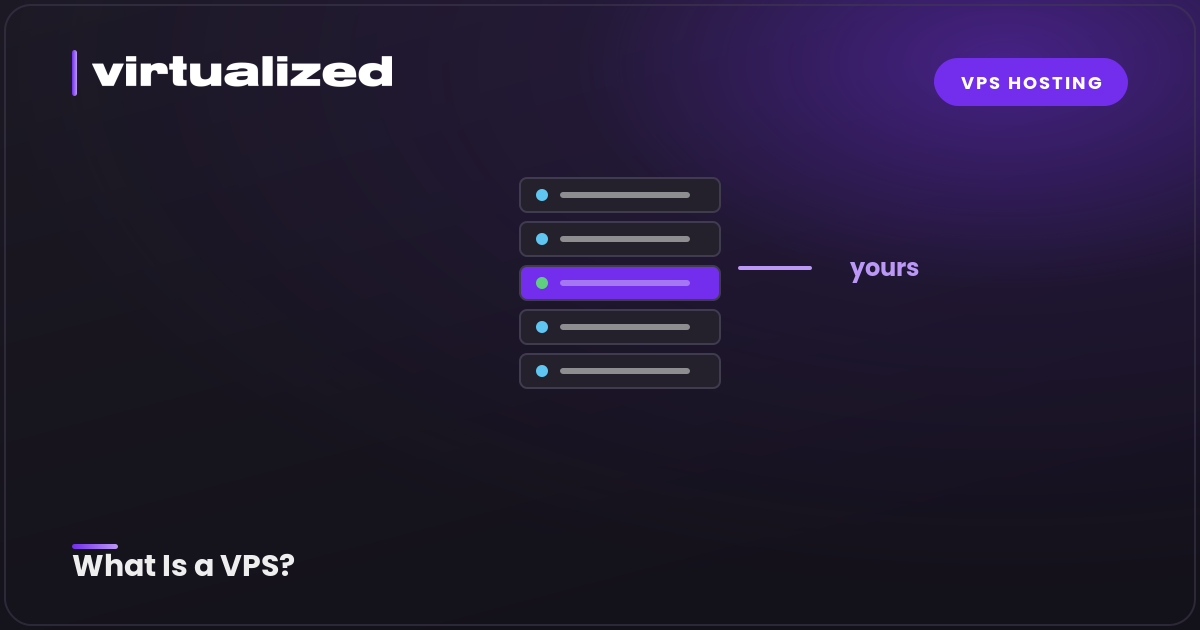
VPS gets thrown around constantly in hosting, usually without anyone stopping to say what it means. It stands for Virtual Private Server, and once you understand the three words, the whole thing makes sense. Here is the plain version, with no assumed knowledge.
The one-sentence version
A VPS is your own private slice of a powerful physical server, with dedicated CPU, RAM, and storage that nobody else can touch, and full control to set it up however you want.
That is the whole idea. Everything below is just unpacking it.
Breaking down the three words
Virtual means it is created in software. One big physical machine is divided into several separate servers, and each of those is a VPS. The split is done at a low level, so each slice behaves like a real, independent computer even though it shares the physical box.
Private means your slice is yours. The resources allocated to your VPS are reserved for you. The other tenants on the same physical machine cannot see your files, use your memory, or eat your CPU. You are isolated from them completely.
Server means it is a computer built to run things and stay on. A website, a game server, a bot, a database, a development environment. It sits in a datacenter, stays powered, and stays connected, which is the part your own laptop is not good at.
How it compares to the alternatives
The easiest way to understand a VPS is to put it between the two things on either side of it.
Shared hosting is the cheaper option below it. On shared hosting, you and many other customers share one pool of resources with no real isolation. It is fine for a small static website, but when another site on the box has a busy day, your site can slow down, and you do not get real control over the environment. You are a guest, not an owner.
A dedicated server is the bigger option above it. That is an entire physical machine that is yours alone. Maximum power and total isolation, at a higher price, and usually more than a single project needs.
A VPS sits in the middle and that is exactly why it is so popular. You get dedicated resources and root access like a dedicated server, at a price much closer to shared hosting, because you are sharing the physical hardware without sharing the actual resources.
What root access gives you
One thing that sets a VPS apart from shared hosting is that you get root, which means full administrator control. You can install any software you want, change any setting, run any stack, and configure the machine to suit your project rather than working around someone else's limits. If you have ever hit a wall on shared hosting because you could not install the thing you needed, root access is the fix.
What people actually use a VPS for
A VPS is a general purpose machine, so the list is long, but the common ones are:
- Hosting websites and web apps, on any framework you like
- Running game servers like Minecraft, Rust, or ARK
- Keeping bots and automations online around the clock
- A development or staging environment you can reach from anywhere
- Small to mid sized databases
- A private VPN or other personal services
If it runs on Linux or needs to be online all the time, a VPS is usually the natural home for it.
How you connect to one
When you order a VPS you get an IP address and login details. You connect to it over SSH, which opens a secure command line on the server from your own computer, and from there you set it up. The first login feels like a small milestone, and after that it is routine.
Is a VPS right for you?
If you have outgrown shared hosting, or you want real control over your environment, or you need something online all the time that your own machine cannot reliably provide, a VPS is almost certainly what you want. It is the default answer for the large majority of projects, and you can resize it as you grow rather than guessing your needs on day one.
Our VPS plans come with dedicated resources and free DDoS protection on every tier, and they deploy in about a minute, so the gap between deciding you want one and actually having one is short. If you are not sure which size to start with, the VPS page lays out exactly what each plan includes.